Are Gen Z Really Favouring TikTok Over Google Search? What the Data Actually Says (and How to Optimise for Social Search in 2026)
In the pantheon of social marketing statistics, here’s one the industry is ride or die for:
“40% of Gen Z use TikTok instead of Google.”
It’s been doing the rounds since 2022, you’ll find it on every “trends to watch” deck, and at this point it’s less a statistic than a personality trait. The problem is, nobody ever finishes the sentence. Instead of what, exactly? For what kind of search? And is it even still true in 2026?
The stat that launched 1,000 youth acquisition strategies (and what’s missing from it)
The “TikTok is the new Google” line traces back to Google’s own comments in 2022, which got picked up by outlets like the New York Times and spread from there. But newer data tells a messier, more interesting story.
Adobe’s 2026 research found that among Gen Z, the share who said they’re more likely to rely on TikTok than Google actually dropped from 8% to 4% between 2024 and 2026: a 50% decline. At the same time, 65% of Gen Z still say they’ve used TikTok as a search engine, but only 25% found it effective for actually getting good information.
So the real pattern isn’t “Gen Z ditched Google for TikTok.” It’s: young people search on social media constantly, but they don’t fully trust what they find there, and Google hasn’t been replaced; it’s been added to.
For example: for many of us, myself included, “where should we eat?” has become a multi-platform investigation. Google gets the new restaurant due diligence: stars, reviews, menu, confirmation you’re not about to waste $28 on disappointing pasta. Then Instagram gets the vibe check. Is it dark and moody? Does the food actually look good when it’s not the restaurant posting it?
Google tells you whether it’s good. Instagram tells you whether it’s your kind of good. Same restaurant. Two completely different jobs. Both search.
The opportunity here is not “beat Google.” It’s “show up in a second search habit your audience already has, one with way less competition than Google.”
Other numbers back up how big that habit has become:
- Hootsuite reports that Instagram and TikTok have overtaken Google for product discovery among Gen Z, and 40% have used TikTok to search.
- Older Forbes-reported research on 18–24 year olds found Instagram (67%) and TikTok (62%) both edging out Google (61%) specifically for local search — think “best coffee near me,” not general knowledge questions.
- Broader trend reporting for 2026 confirms social platforms are increasingly functioning as search engines across the whole customer journey, not just for entertainment.
What this actually means for your content
If people are typing questions into TikTok and Instagram search bars the same way they’d type into Google, your content needs to be findable, not just postable. That’s a different skill to what most social teams have been doing.
Here’s what actually influences whether you show up in social search results:
- Your caption is basically a meta description now. Lead with the exact phrase someone might search. For example: “best budget-friendly hotels in Byron Bay,” not “living my best life in Byron”. TikTok’s algorithm weighs keywords in captions heavily, and it works best when the caption naturally explains what the video’s about, not when you’re stuffing keywords in.
- Say the keyword out loud. TikTok transcribes your audio and reads on-screen text, and both feed into how it ranks your content for search. If you’re doing a review or how-to video, actually say the thing people would search for — “this is the best budget hotel in Byron Bay” — in the first few seconds.
- Text overlays matter as much as voice. Same logic. If your on-screen text is vague or just aesthetic, you’re leaving a ranking signal on the table. Make it clear and specific.
- Hashtags are for categorisation now, not reach. The 30-hashtag spam era is over. A handful of specific, relevant tags (think #ByronBayCafes over #foodie) help the platform understand what your content is actually about and who to show it to.
- Alt text and location tags are free wins on Instagram (and should be part of your ongoing accessibility optimisation anyway). Instagram auto-generates alt text, but it’s usually pretty generic. Writing your own with real keywords, plus adding a location tag if you’re a local business, genuinely helps you turn up in Explore and local search.
- Answer real questions. TikTok’s Q&A feature surfaces actual community questions in search results. If people keep asking the same thing in your comments, that’s a free content brief and a chance to appear in search for that exact question later.
A simple pre-publish checklist:
- Caption leads with a phrase someone would actually type
- Keyword said out loud in the first 3 seconds
- On-screen text is clear and specific, not just vibes
- Alt text written manually (Instagram)
- Location tag added if relevant
- A handful of specific hashtags, not 30 generic ones
A brand that’s already built for this: The Grounds of Alexandria
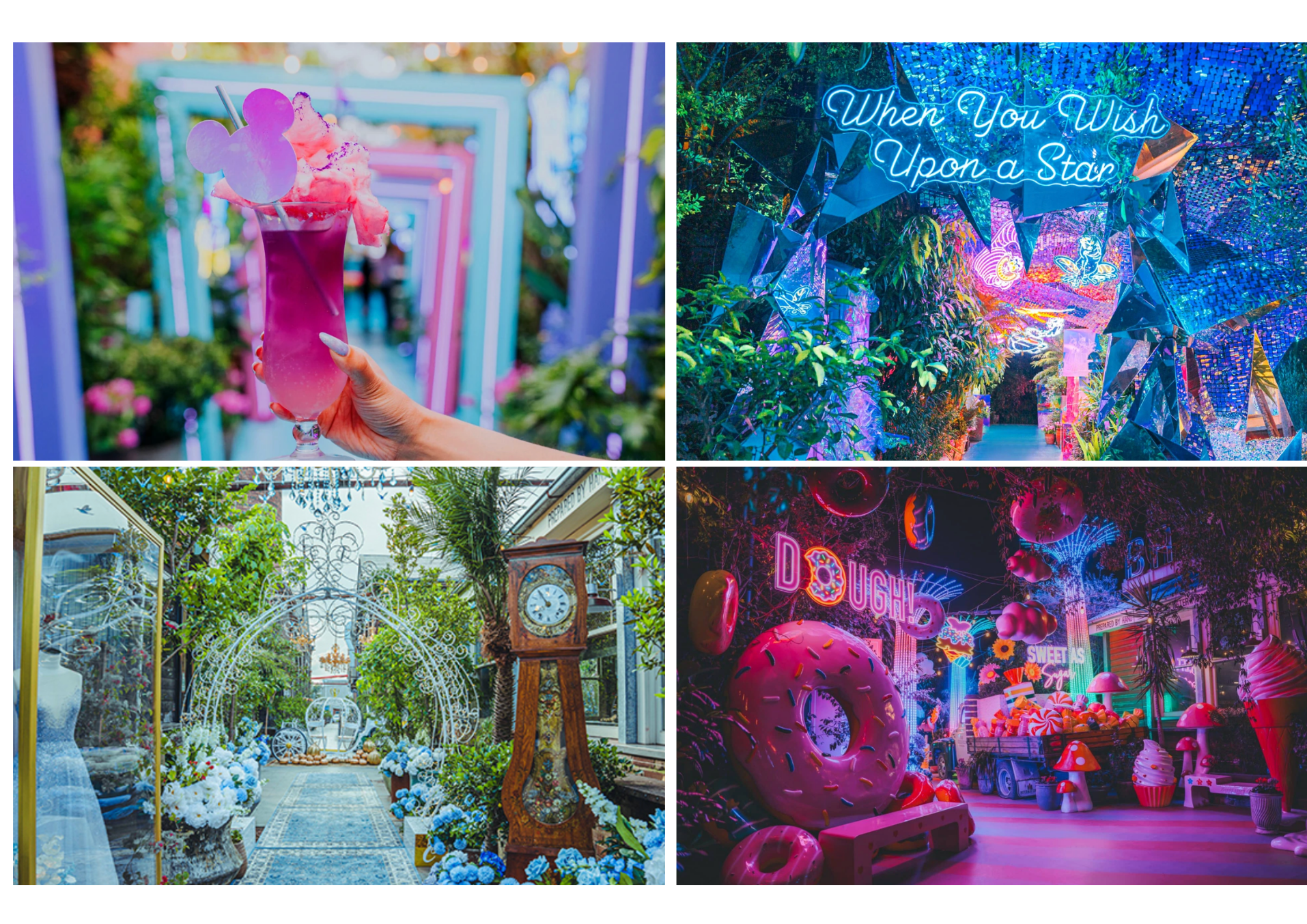
All photo rights: The Grounds of Alexandria
If you want a real example of a business designing for the “check Google, then check Instagram for the vibe” habit, The Grounds of Alexandria is basically the case study. It’s a genuinely good hospitality precinct in Sydney, but it’s also become known as one of the most photographed venues in the country, and that’s by design.
The Grounds regularly does full brand takeovers of its gardens and laneways — Disney’s Beauty and the Beast, a Claris the Chicest Mouse in Paris pop-up, a Disney 100th-anniversary installation — with themed food, cocktails, and set dressing built specifically to be photographed. Access to each activation is only for guests who’ve made a dining reservation, so the “backdrop” isn’t just a marketing gimmick, it’s directly tied to bookings and covers.
Remember that little research process from earlier — Google for the rating, Instagram for the vibe check? The Grounds has basically built its entire strategy around being the answer to that second search. It works because it matches exactly how people actually search for a restaurant: Google tells you it’s good, Instagram tells you it’s worth the trip. The Grounds has essentially made “worth the trip” their whole content strategy — every activation is built to answer the unspoken search query “does this place look as good as everyone says,” and every answer requires you to actually book a table to see it in person.
And a beauty example: Rhode
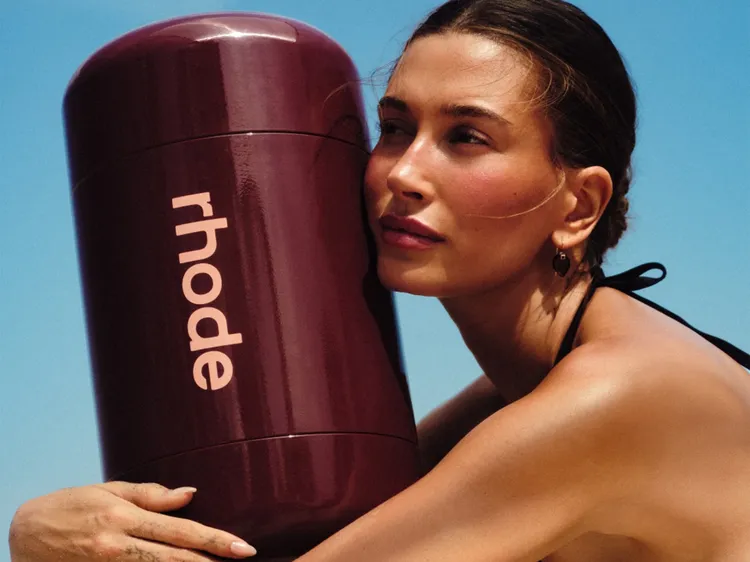
All photo rights: Rhode
If restaurants are one end of this, beauty is the other. Rhode, Hailey Bieber’s skincare brand, launched in 2022 with just three products in minimal, refillable, grey packaging, deliberately unfussy, built to actually look good in a mirror selfie or a shelfie, not just on a shop shelf. Its Peptide Lip Treatment got dubbed “glazed donut lip” by TikTok creators, and instead of fighting that label, the brand fully embraced it.
This is a social goldmine because “glazed donut lip” became something people actually typed into TikTok and Instagram search bars. A real, owned search term that Rhode’s own community created and the brand rode (no pun intended). Between the product itself, the visual consistency, and constant behind-the-scenes content on Instagram and TikTok, Rhode built its own discoverable language rather than relying on generic beauty keywords. It clearly worked: the brand hit $212 million in sales and was acquired by ELF Beauty for roughly a billion dollars in 2025, just three years after launch.
The lesson here isn’t “make your packaging pretty.” It’s that Rhode gave people a specific, memorable phrase to search and share, and then made sure the content answering that search (their own posts, plus thousands of others’) was consistent enough to be instantly recognisable. That’s the beauty-industry version of what The Grounds does with a themed laneway: give people something so specific to search for that you basically own the results.
So what, now what?
Optimising for search doesn’t mean chasing keywords over quality. The 25% “found it effective” stat from earlier is the warning sign here: people are searching on these platforms constantly, but a lot of what they find when they get there isn’t good enough to trust.
That’s your opening. Content that’s genuinely useful, specific, and answers real questions — not just SEO-bait dressed up as a caption — is what earns saves, shares, and repeat views. And those are exactly the signals that tell the algorithm to keep showing your stuff in search. Practically, here’s the shift to make:
- Stop treating captions as decoration and start treating them as the first thing a search algorithm reads about your content.
- Stop optimising for one platform’s logic and start asking “what would someone actually type to find this?” on each one separately: a Google query, a TikTok query, and an Instagram query for the same topic can look completely different.
- Stop measuring success by reach alone, and start paying attention to saves, shares, and search-driven views specifically. They’re a better signal that you answered a real question well.
Don’t treat any of this as “abandon Google, TikTok is search now.” That headline was never accurate, and the data backs that up. Treat it instead as: there’s a second search engine your audience is already using, almost nobody is optimising for it properly yet, and the bar for actually being helpful there is still pretty low. That’s a genuinely easy opportunity to take — while it’s still easy.
Want your content actually showing up where it matters? That’s what we do.
Turn “post and pray” into a real search and social strategy by getting in touch with us.

Claire Joachim | Managing Director