One of my favourite things about judging the Webby Awards is how often it introduces me to something I wish I’d found sooner. That’s how I ended up with Amelia Dimoldenberg’s Chicken Shop Date, Matt Rogers and Bowen Yang’s Las Culturistas, and Chan Jae’s Drawings for my Grandchildren. I always come away from judging with a list of new things to watch, read, listen to, and send to friends who enjoy an internet rabbit hole.
I’ve been a judge for eight years, and in that time I’ve noticed some patterns in the work that I enjoy most. What follows aren’t rules, and they’re definitely not a formula for winning a Webby. These are just some things that I’ve loved and still think about, and if they’re new to you, you might enjoy them too.
1. Alignment Over Invention
Great work usually isn’t about reinventing the wheel; it’s about making sure that wheel is built for the road it’s travelling on.
What often gets in the way of that is the instinct to maximise coverage. It’s very easy to take something you’re proud of and try to stretch it across every platform, Instagram, TikTok, YouTube, in the hope that more distribution will translate into more impact. I understand the impulse, but more often than not it flattens the work and turns it into a compromise. It’s like trying to watch an IMAX film on your phone: All the elements are technically there, but the experience has been stripped of the scale that made it worth watching in the first place.
The work I love does the opposite. It pays close attention to the conditions of the platform it lives on, the tone, the pacing, the way people actually interact with it, and it builds from there. An idea might lean into Instagram Stories because it benefits from taps, replies, or a sense of immediacy, or it might live on TikTok because it gains something from rhythm, repetition, or serialisation. On YouTube, the frame, duration, and depth can be part of the idea itself rather than just a container for it. In each case, the platform isn’t an afterthought; it’s part of the creative logic.
That’s the distinction that matters for me. It’s not simply about making something good and then distributing it well; it’s about shaping the idea so that it belongs exactly where it appears.
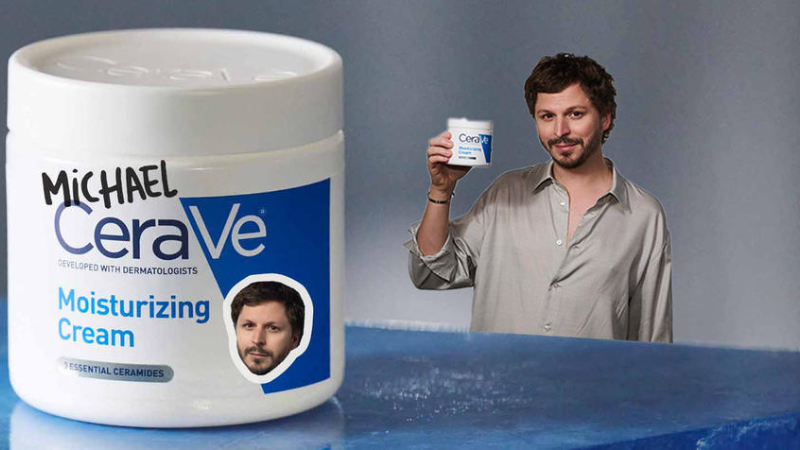
- CeraVe: Michael CeraVe (2024): I love it when brands lean into internet culture, but what’s interesting here isn’t just the idea, it’s how deliberately it was built to behave like something that truly belongs online. CeraVe created a campaign around the idea that actor Michael Cera was behind the brand, playing off the similarity in name, and then seeded it in the places where that kind of speculation would naturally take hold.
It started with TikToker @HayleeBaylee “spotting” Michael Cera signing CeraVe bottles, followed by “leaked” paparazzi photos on the front page of Reddit. Then, it was a bizarre YouTube interview with @BobbiAlthoff, which led to more influencer campaigns, Reddit threads, and a strangely earnest website. The campaign works because A) it was purposely silly in a way the internet loves, and B) it felt like a story-lead treasure hunt rather than a campaign trying to announce itself. It unfolded in fragments, in the same way people usually piece things together online, with each platform carrying a slightly different part of the story. It also didn’t matter which piece you saw first or if you even saw the whole story – every bit was distinct and could stand on its own.
The campaign was so weird and funny, and so perfectly aligned to the platforms it used, that it made me want to go and find all the pieces, not because I was being directed there, but because it was genuinely fun to follow. It didn’t feel like one idea stretched across platforms, it felt like something designed to exist across them from the start.
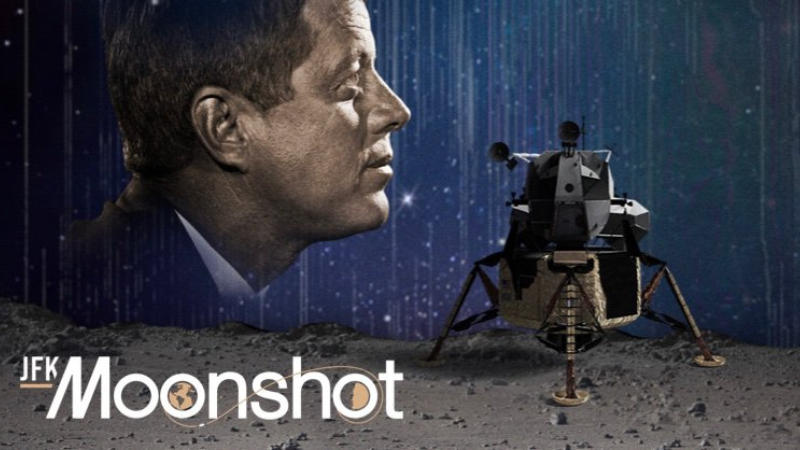
- JFK Moonshot (2020): JFK Moonshot was a fully-synchronised augmented reality recreation of Apollo 11 where every moment, maneuver, and milestone unfolded in real time, second-by-second, precisely 50 years later. What stood out is how differently it showed up depending on where you found it, and how much that actually added to the experience. They built an AR app that lets you drop the Saturn V rocket into your own backyard. On Twitch, they re-broadcast the mission as a 120-hour “live” event, making the journey feel like it was happening in real time, and they engaged streamers like Dr. Lupo, DazValdez and Seum to provide a “play through” of the action. On Instagram Stories, they provided “real-time” updates from the astronauts aboard Apollo 11.
What I like about it is that you never really get the full picture in one place. Each platform gives you a different way into it, and it makes you want to keep following the thread because there’s genuinely more to find. For me, this was a real masterclass in multi-platform storytelling, and it remains one of my favourite entries to this day.
2. Substance Over “Slick”
For me, access and substance will always matter more than technical production.
Some truly talented creators will hold back on submitting work because they don’t think their setup is good enough, or because the work doesn’t feel polished enough against big budgets and studio access. That’s a real shame, because some of the pieces that have stayed with me most from judging the Webby Awards have been podcasts with slightly muddy audio or video series that are properly lo-fi.
They weren’t memorable because of that lack of polish. If anything, you stop noticing it quite quickly. What stays with you is the substance. The perspective, the access, the sense that you’re being shown something you wouldn’t otherwise get to see.
When someone is actually in the room, asking better questions, or documenting something with real proximity, or letting you into something vulnerable and raw, it changes how the work feels. You can’t manufacture that kind of connection after the fact. It either exists or it doesn’t, and when it does, it will always outweigh everything else for me.
A lack of gloss doesn’t usually matter as much as people think it does. If the substance is there, people will stay with it.
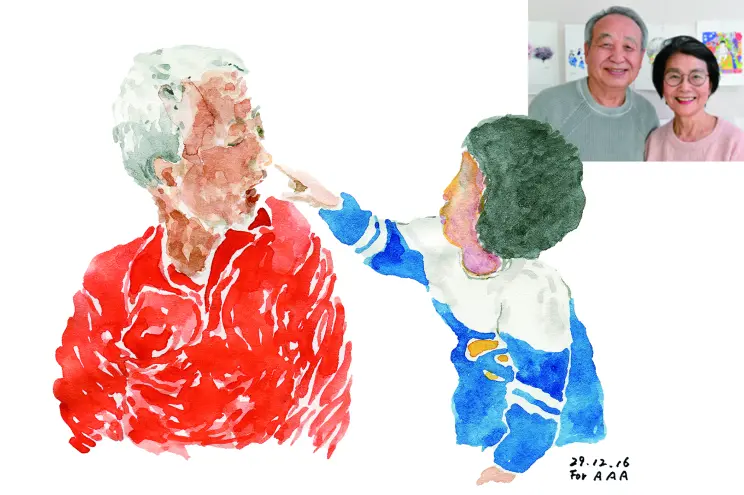
- Drawings for my Grandchildren (2019): This started as a simple way for a grandfather to stay in touch, drawing and sharing small moments from his life on Instagram for his grandchildren. There’s no production behind it, no sense of scale built into the idea, and yet it’s reached millions of people.
What makes it beautiful isn’t technical skill or polish (though the drawings are gorgeous), it’s the intent behind it. It feels open in a way that’s quite rare online. You’re being invited into something personal without it being framed or performed for you, and that generosity carries through in every post. It’s not trying to be anything more than what it is. It’s also a good reminder that no amount of gloss can manufacture that feeling. You either have something real at the centre of the work, or you don’t. - The Telepathy Tapes (2025): This is an independent podcast with a pretty minimal setup, but the story is so well told that it just doesn’t matter. There’s no sense of it trying to impress you through its technical prowess. It’s just confident in what it is, and the story it has to share, and that carries it. The voice, the pacing, the way it draws you in, it all feels considered without feeling overworked.
3. Insider Stories
I’ve always been drawn to things that give you a genuine sense of being let in. Not in a polished, “behind the scenes” way, but something closer to being invited into a space you wouldn’t normally have access to.
A lot of that comes down to who’s doing the telling. The most interesting work tends to come from people who are speaking from their own experience, whether that’s shaped by culture, community, identity, or just proximity to something the rest of us don’t see. It’s not about translating that experience for a wider audience, or smoothing it out to make it more digestible. It’s about letting it exist as it is.
It also feels like something that’s shifted more recently. Not just in terms of access, but in terms of people choosing to share these perspectives on their own terms.
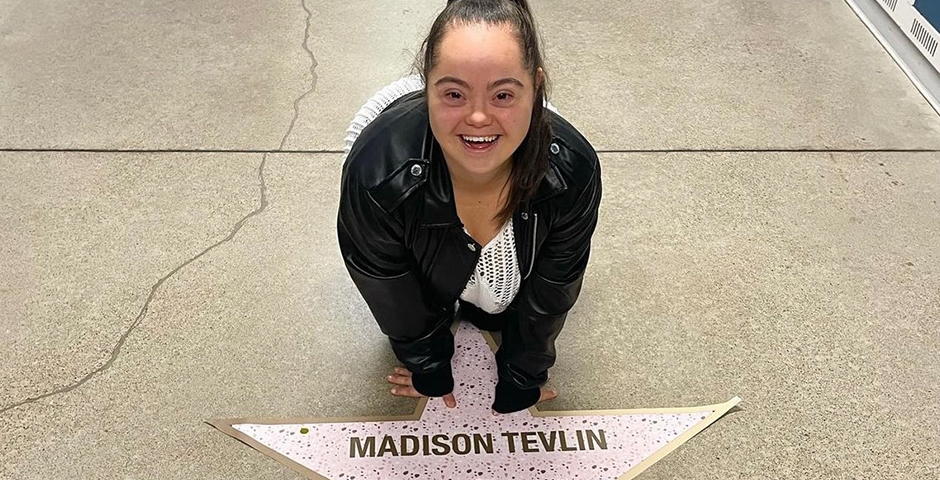
- Madison Tevlin – “Down Syndrome Is the Least Interesting Thing About Me” (2024): This is a short film featuring Madison Tevlin, created in response to the way people tend to define her by her disability. What I like about it is how clearly her voice comes through. It doesn’t feel like anyone is stepping in to shape or interpret it for you. She’s present in a way that feels direct and self-defined.
You see her doing the things she actually does, working, studying Shakespeare, just moving through her life, without it being framed as something exceptional or explained on her behalf. It doesn’t feel like an observation of a disability, but rather an opportunity to spend time with a funny, thoughtful, and hardworking person who’s generous enough to give you a glimpse into her personal life. - Freedom to Thrive (2025): This is a podcast built around the experiences of people navigating immigration systems in the US, told in their own words. There’s very little distance between the person speaking and the listener. It doesn’t feel mediated or interpreted, and sometimes that makes it quite a difficult listen. You’re hearing people talk about their lives, their decisions, and what they’re dealing with, without it being shaped into something more polished or palatable. Nothing is stepping in to frame it or smooth it out, and that’s what gives it its weight. I’m glad for podcasts like this, and the people brave enough to make them and share their stories.
4. Big Meaning, Small Budget
You can do a lot with very little. Some of the most memorable work I’ve seen has been pretty minimal in how it’s made, but very clear in what it’s trying to do. The internet is just a tool; the real power still comes from having a message worth sharing and the empathy to deliver it.
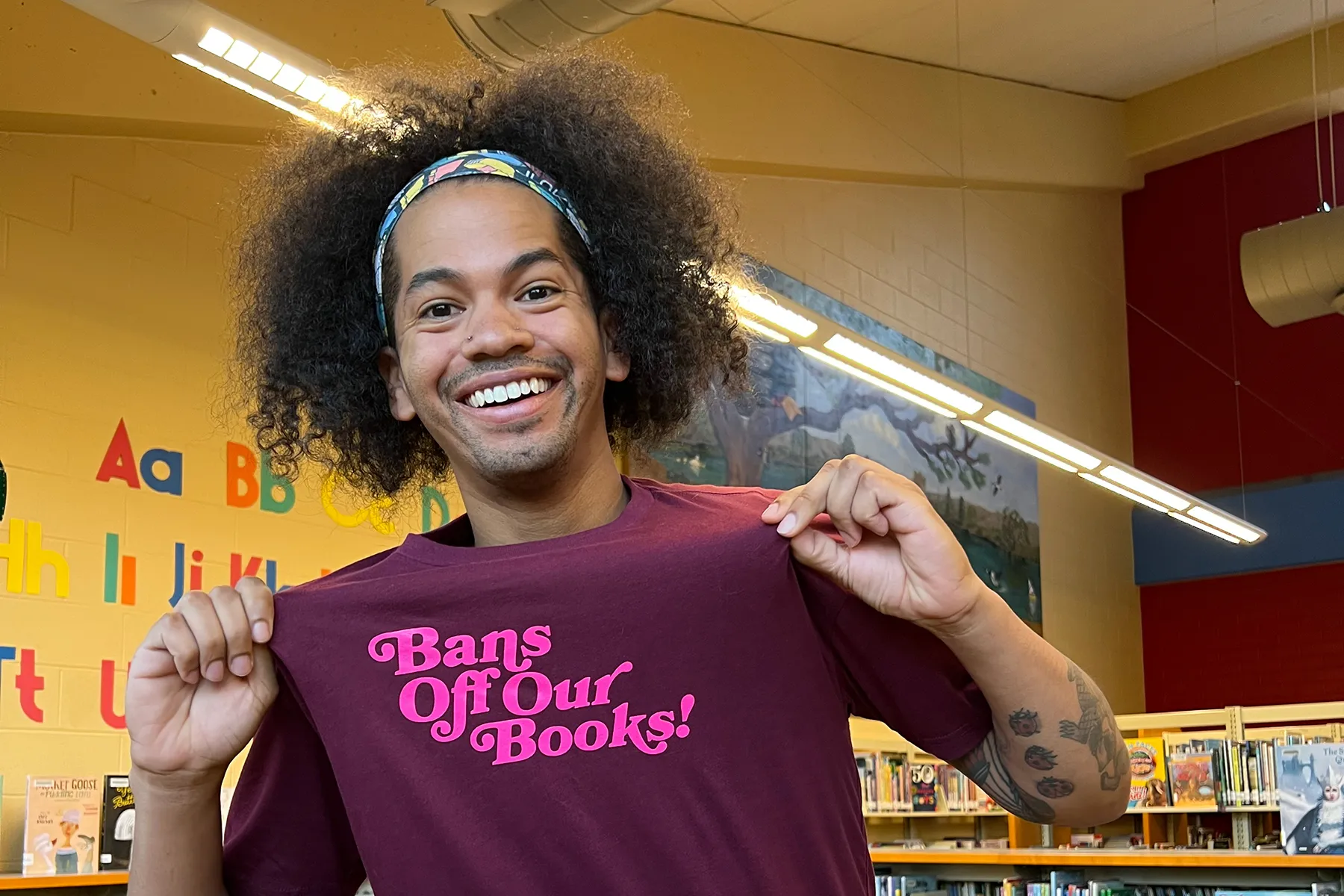
- Library Kids (2025): This is Mychal Threets sharing moments from his day working in a local library, mostly through TikTok and Instagram. It’s things like interactions with kids and families, book recommendations, and small, everyday moments that show what a library actually feels like to be in.
The videos are simple, often just him talking to camera or capturing what’s happening around him, but there’s a real sense of care in it. What stands out is how far it’s travelled without ever feeling like it’s trying to scale. It’s still rooted in one place, one person, one point of view, but it’s reached a much wider audience because of that clarity. There’s minimal production around it, just Mychal and his phone, and a consistency and genuine enthusiasm for what he’s sharing. - Merriam-Webster Social (2020): Merriam-Webster’s social accounts are a good example of how far you can go with a very simple format. At its core, it’s just a dictionary, but the way they show up online is by responding to what’s happening in the world through language.
They’ll post definitions, highlight how certain words are being used in the zeitgeist, or surface older terms that suddenly feel relevant again. Sometimes it’s tied to politics or cultural moments, sometimes it’s just a subtle correction, sometimes it’s an absolute roast of something silly, but it’s always rooted in what people are already talking about. There’s almost no production to it. Most of it is just text, screenshots, or straightforward posts, but it doesn’t feel lacking because the thinking is so clear. It’s timely, it’s specific, and it understands how to exist within those platforms without needing anything extra around it.
I always tell my partners: if you’re feeling uninspired, go look at the Webby nominees. It’s the best way to see the art of the possible and find something that might spark your own next big idea.
Public voting for the 2026 Webby Awards is now open. Go see the work, find the things that move you, and help decide who takes home the People’s Voice.
My thanks to the International Academy of Digital Arts and Sciences for having me again this year. I can’t wait to do it all again in 2027.
Claire Joachim | Managing Director